 Husky Dog Sledding Tromsø
What to Wear and What to Bring for Dog Sledding in Tromsø
Wondering what to wear for dog sledding in Tromsø? For dog sledding in Tromsø you need a woollen base layer, a warm mid layer and thick socks, and that is close to the whole list. Every winter tour in our comparison of husky dog sledding Tromsø tours lends a thermal suit and winter boots, and most also lend mittens and a hat, so you do not need to buy Arctic gear for one day out. The cold is real, with average highs around -1°C (30°F) in January and February and average lows near -5°C (23°F), and the wind on a moving sled makes it feel sharper. The suit blocks most of that. What is left on your list is short: warm socks, a buff, sunglasses for late winter glare, a phone kept in an inner pocket. This page goes through each layer, what each operator lends, and what not to bother packing. Prices and sled times sit side by side in husky dog sledding Tromsø tours.
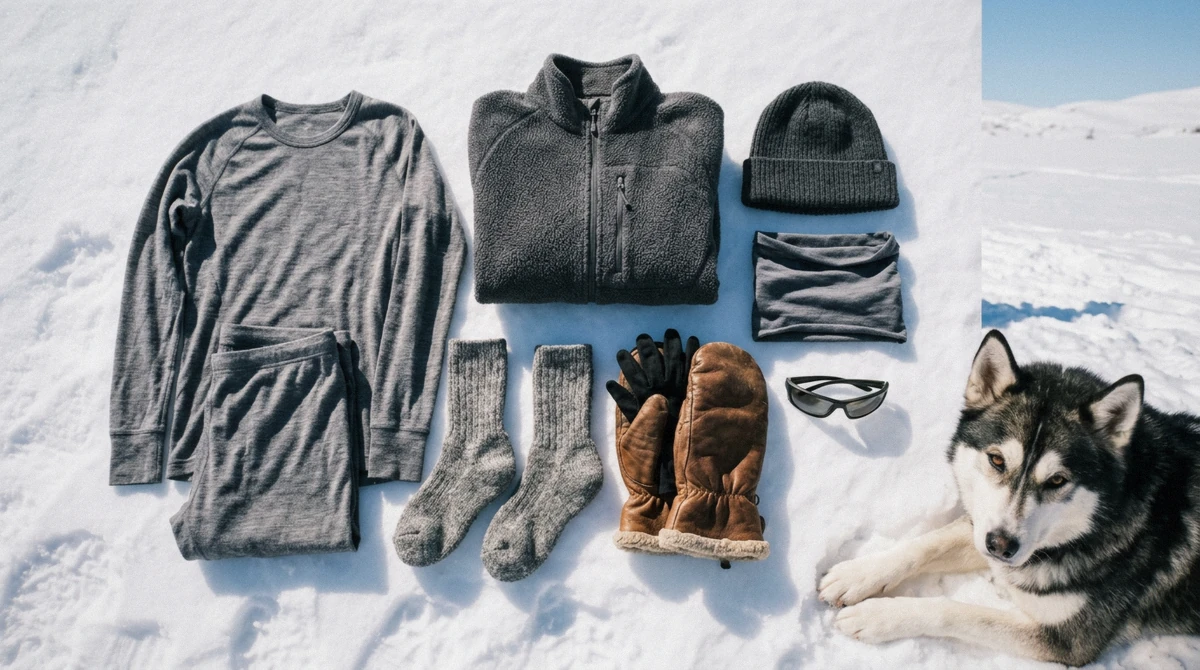
Illustrative image of the layers that go under the lent suit.
Quick answer Tours lend the thermal suit and boots, you bring wool layers underneath
Every winter dog sledding tour compared on this site lends a thermal suit and winter boots, and most lend mittens and hats as well. Under the suit you wear a wool or synthetic base layer, a fleece or wool mid layer, and thick woollen socks. The suit does the heavy lifting against wind and cold, so your own clothing is about managing sweat and stillness, not surviving a blizzard. Bring a buff, sunglasses for the bright late-winter months, and keep your phone close to your body. Cotton next to the skin is the one clear mistake to avoid. Summer visits are different: rain clothes and rubber boots are lent, so you just need warm layers under them.
Key takeaways
- All compared winter tours lend a thermal suit and boots, and most also mittens and hats, so the self-drive husky sledding day on Kvaløya needs no gear purchase from you.
- Your own list is short: wool base layer, mid layer, spare socks, a buff, sunglasses. The short self-drive ride from Tromsø lends the same suit as tours that cost over a hundred dollars more.
- Cotton is the one thing to leave in the hotel. It holds sweat and freezes.
- Average highs in January and February sit around -1°C (30°F) and lows near -5°C (23°F), and inland Tamok runs colder than the coast.
- Boots are lent on winter tours and rubber boots on the summer puppy training visit, so you never need to buy or carry your own.
Which packing list is yours
If You booked a winter self-drive tour and will stand on the runners
Wear a wool base layer, a fleece mid layer and thick socks under the lent suit. The Kvaløya self-drive tour gives you 70-80 minutes on the trail, so sweat management matters more than extra bulk.
If You booked a guided ride and will sit as a passenger
Add one more mid layer. Sitting still is colder than driving, and the guided husky sled ride with lunch keeps you seated for about 45 minutes.
If You are travelling in February or March
Pack sunglasses or ski goggles. The sun returns fast and reflects off snow, with sunshine climbing from 3 hours in January to 111 hours in March.
If You booked the summer puppy training visit
Skip the thermals. Rain clothes and rubber boots are lent, so normal warm layers and shoes you do not mind mud on are enough for the summer husky farm visit.
If You are driving yourself to the private Målselv kennel
Dress in the car park before you set off, since the kennel is about 2 hours from Tromsø and the private family kennel day has no city meeting point to change at.
The three-layer system under the lent suit
The lent thermal suit does most of the work. What it cannot do is move sweat away from your skin or stop your own layers from bunching up under the harness of standing on the runners. Visit Tromsø advises warm woollen base layers and dressing in several layers under the suit.
The system is simple and cheap.
Base layer: wool or synthetic, never cotton
Merino wool long johns and a long-sleeved top are the standard answer. Synthetic sports thermals work almost as well. Cotton T-shirts and cotton leggings are the one thing to rule out: cotton holds moisture against your skin, loses all insulation when damp, and dries slowly in the cold.
You will sweat on the trail, even at -5°C (23°F), especially if you push the sled uphill.
Mid layer: fleece or wool
A fleece jacket or a thick woollen sweater over the base layer is enough for most winter days. If you run cold, or you know you will be the passenger rather than the driver, bring a second light mid layer in your day pack and add it before the briefing rather than halfway along the trail.
The lent suit over everything
One normal pair of trousers under the suit is plenty. The suit zips over your layers, the hood or a hat covers your head, and between suit and boots almost no skin is left out. Guests who over-layer are the ones who end up sweaty and then chilled.
What each tour lends and what stays on your list
Gear provision is consistent across the tours we compared. Every winter listing lends a thermal suit and winter boots, most add mittens and hats, and the summer visit lends rain gear instead. The table below collects what each listing states, so you can see exactly what is covered before you book.
| Tour | Lent by the operator | You bring yourself | Sled time |
|---|---|---|---|
| Self-Drive Husky Dog Sledding Adventure on Kvaløya | Thermal suits, boots, woollen socks, hats, mittens | Base layer, mid layer, buff, sunglasses | 70-80 minutes |
| Husky Sled Self-Drive with a Sámi Stew Lunch | Thermal suit and boots (stated for winter tours) | Base layer, mid layer, thick socks, buff | About 45 minutes |
| Fun and Easy Dog Sledding Adventure in Breivikeidet | Thermal suit and boots, most gear lent | Base layer, mid layer, socks, buff | About 2.5 hours at camp |
| Dog Sledding Adventure in Tamokdalen | Thermal suit and boots | Base layer, mid layer, extra socks | 3.5 hours at camp, turn-taking |
| Guided Husky Sled Ride with Traditional Lunch | Thermal suit and boots | Base layer, mid layer, extra warm layer for sitting | About 45 minutes as a passenger |
| Husky Experience with a Short Self-Drive Ride | Thermal suit and boots | Base layer, mid layer, buff | Up to 30 minutes in total |
| Northern Lights Husky Visit | Winter outer clothing for the evening | Warm layers, hat, buff | None, no sledding |
| Private Husky Sledding in Målselv | Thermal suit and boots | Base layer, mid layer, socks | Adapted to conditions and the dogs |
| Summer Puppy Training Visit | Rain clothes and rubber boots | Warm layers underneath, normal shoes for town | None, summer activity |
Because the suit and boots are universal, the difference between listings is food, sled time and transport, not gear. The two racing-kennel tours serve bidos reindeer stew, while the Kvaløya and Breivikeidet listings serve cake and hot drinks. Gear is one reason a first-timer does not need to shop before booking, a point our page on how much dog sledding in Tromsø costs also makes.
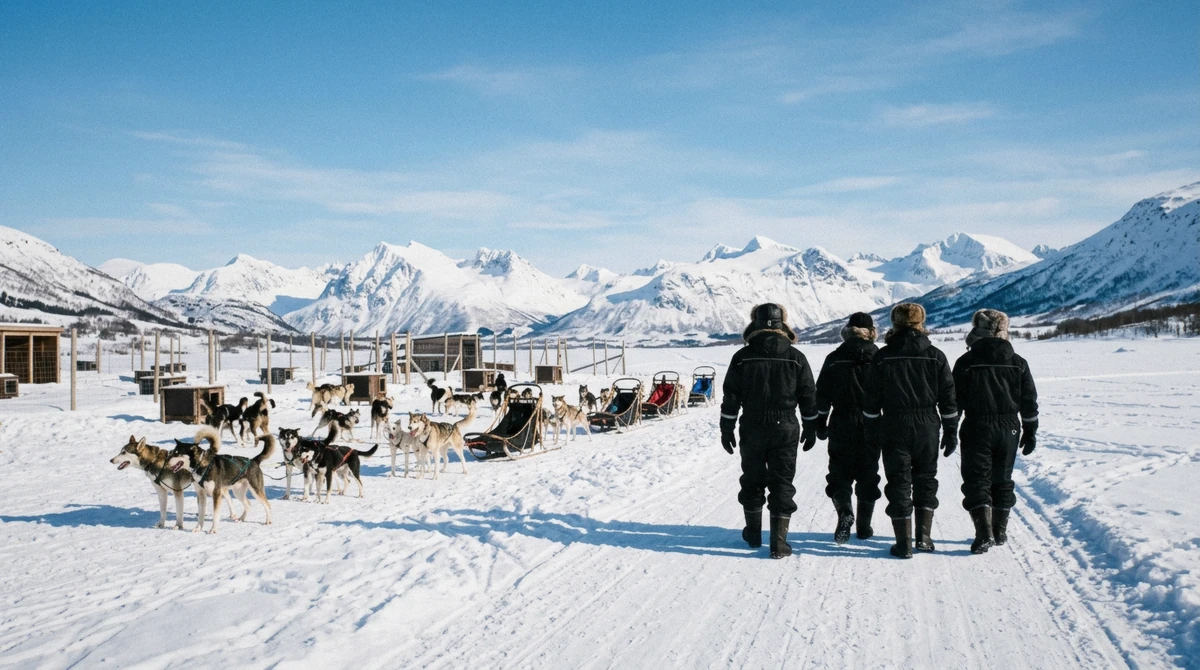
Illustrative image of guests in the lent thermal suits.
Your packing checklist
Print this or screenshot it. Everything below fits in a small day pack on top of what you wear to the meeting point.
- Merino base layer, top and bottoms: keeps sweat off your skin
- Fleece or wool mid layer: your real insulation under the suit
- Two pairs of woollen socks: one spare pair in the pack
- Buff or neck tube: covers the gap between hat and collar
- Hat that fits under the suit hood: ears freeze first
- Sunglasses or ski goggles: snow glare from February onward
- Thin liner gloves: for photos and the dog yard before mittens go on
- Hand warmers: cheap insurance for the passenger seat
- Lip balm: cold air and wind dry lips fast
- Phone in an inner pocket: batteries drain in the outer cold
- Small day pack: for the spare layer you might shed
- Snack and water: no lunch is included on several listings
Hands and feet: the two places that get it wrong
Feet
Winter boots are lent on every compared tour, sized over your own socks, so you need no footwear purchase at all. The mistake is sock volume: one thick woollen pair, or a thin liner plus one wool pair. Two thick pairs squeezed into a lent boot cut circulation and give you colder feet than one pair would.
The Kvaløya kennel lends woollen socks along with the boots, so arrive in normal shoes and change there. Bring the spare pair in your pack for after, when your first pair is damp.
Hands
Most winter listings lend mittens, and mittens beat gloves for standing still on the runners because your fingers share warmth. The gap is the minutes before and after: harnessing dogs, taking photos, eating cake in the lavvo. Thin liner gloves under the lent mittens solve that, and they let you handle your phone without bare hands.
Hand warmers dropped into the mittens before the trail starts are the cheapest comfort upgrade on this page.
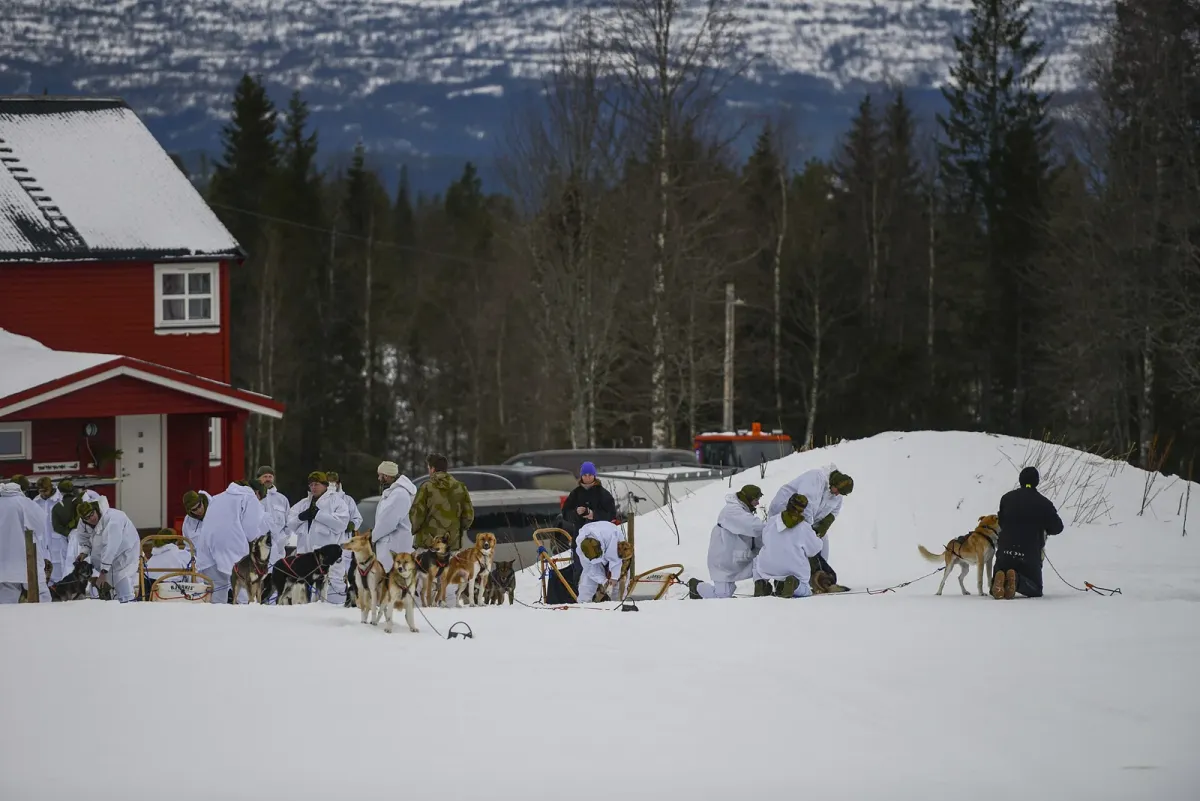
A husky kennel in inland Troms. Photo: Sgt. Cassandra Jindra, Public domain, via Wikimedia Commons.
Face and eyes: buff, hat and the late-winter glare
A buff or neck tube is the item people most often forget. The suit hood covers your head but a buff seals the gap at your neck and can be pulled up over your chin and nose when the sled is moving. At 15 to 20 kilometres an hour of apparent wind, exposed skin around the neck and jaw is what stings first.
Bring a hat that sits close to the head so it fits under the hood without pressure.
Sunglasses sound like a summer item until you look at the light figures. Tromsø gets 3 hours of sunshine in January and 111 hours in March, and February and March sledding happens under strong light bouncing off snow. Low sun on the trail plus snow glare is genuinely painful without eye protection.
Ski goggles are better if you own them, ordinary sunglasses are fine if not. During the polar night, from about 26 November to 15 January, you sled in blue twilight and glasses matter far less.
What not to wear or bring
Operators say less about prohibitions here than on some activities, but the limits that do exist are worth knowing before you pack. To weigh every option at once, see Husky Dog Sledding Tromsø.
- Cotton next to the skin. It stays wet and cold, which is the fastest route to a miserable trail.
- Extra bulky boots. Winter boots are lent, and your own ski boots or heavy hikers just take up luggage space.
- Tripods. There is little room on the sled, and one kennel asks guests to leave tripods in the equipment room.
- Big bags. Sled space is shared with a passenger and there is nowhere to stow a large pack. A small day pack is the ceiling.
- Jeans under the suit. They restrict movement on the runners and stay cold when damp.
- Jewellery and loose scarves with dangling parts. They get caught when you handle the dogs or the sled.
A sled dog with heterochromia. Illustrative, photographed in Svalbard. Photo: AWeith, CC BY-SA 4.0, via Wikimedia Commons.
Driver or passenger: dress for the job you get
The practical translation: if you are lighter clothed or run cold, take the passenger seat second, not first, and add a layer while the sled is stopped at the swap. Tours where you sit the whole time need the extra layer from the start. The guided ride with lunch keeps you seated for about 45 minutes, so dress one layer warmer than a self-drive guest would. On the Tamokdalen day trip the group splits in two, and part of your camp time is waiting while the others sled, which is another still-and-cold stretch to dress for.
Phones and cameras in the cold
For cameras, the honest answer is that the sled offers little room for gear, and one kennel explicitly asks guests to leave tripods in the equipment room. A compact camera or the phone in a thin glove-compatible case covers most of what you want: the dog yard before departure and the photo stop on the trail. If you carry a mirrorless camera, a strap under your layers beats a shoulder bag, and let the camera acclimatise inside the jacket before shooting to avoid lens fogging.
Packing by season
What you wear underneath changes more between seasons than what is lent on top. The table below pairs the season with a concrete kit, using average figures from met.no normals for Tromsø. Our guide on the best time for dog sledding in Tromsø goes deeper into the seasonal trade-offs.
| Season | Average conditions | Wear this |
|---|---|---|
| November to January | Highs from 2°C (36°F) down to -1°C (30°F), lows near -5°C (23°F), blue twilight in the polar night from about 26 November to 15 January | Full three layers, thickest socks, buff up over the nose, no sunglasses needed |
| February | High around -1°C (30°F), 36 hours of sunshine returning | Same layers plus sunglasses or goggles, the glare season starts |
| March | High about 0.6°C (33°F), 111 hours of sunshine, long days | Slightly lighter mid layer works, sunglasses essential, spare layer for the passenger seat |
| April | High about 4.1°C (39°F), 171 sunshine hours, softer snow | Base layer plus a single mid layer often enough, sunglasses, waterproof outer socks if slush is about |
| May to September | Midnight sun from about 18 May to 26 July, highs up to 16.3°C (61°F) in July, no sledding | Warm casual layers for the summer puppy visit, rain clothes and rubber boots are lent |
What showing up prepared actually costs
The packing answer has a price angle: because gear is lent everywhere, the cheapest tour does not shortchange you on clothing. The table shows what each listing costs and what it lends, using the prices stated at booking.
| Tour | Price per person | Gear lent | Sled time |
|---|---|---|---|
| Summer Puppy Training Visit | $178.50 | Rain clothes and rubber boots | None |
| Northern Lights Husky Visit | $194.82 | Winter outer clothing | None |
| Short Self-Drive Ride from Tromsø | $233 | Thermal suit and boots | Up to 30 minutes |
| Self-Drive on Kvaløya | $356 | Suits, boots, woollen socks, hats, mittens | 70-80 minutes |
| Guided Ride with Lunch | $360 | Thermal suit and boots | About 45 minutes |
| Private Målselv Kennel Day | $435.36 | Thermal suit and boots | Adapted on the day |
So the $233 short ride dresses you exactly as warmly as the $356 Kvaløya day. The money buys sled time and food, not clothing.
Arrive already wearing your base and mid layers, so that at the kennel you only add the lent suit, boots and mittens. Keep a small bag with a spare pair of dry socks for the ride back to town, because feet that sweat on the runners turn cold fast on the bus.
Questions and Answers
What do you wear for dog sledding in Norway?
A woollen or synthetic base layer, a fleece or wool mid layer and thick woollen socks, with the thermal suit, boots and mittens lent by the tour on top. Visit Tromsø advises several layers under the suit. Cotton next to the skin is the one thing to avoid.
Do dog sledding tours provide clothing?
Yes. Every winter tour compared on this site lends a thermal suit and winter boots, and most also lend mittens and hats. The summer puppy training visit lends rain clothes and rubber boots instead.
Do I need my own boots for dog sledding?
No. Winter boots are lent on all compared winter tours and rubber boots on the summer visit. Wear normal shoes to the meeting point and change there, and bring one spare pair of woollen socks in your pack.
How cold is it on a dog sled?
Average highs in Tromsø are around -1°C (30°F) in January and February with lows near -5°C (23°F), and inland valleys such as Tamok are colder than the coast. The apparent wind on a moving sled makes it feel sharper, which is what the lent suit is for.
Can I bring my camera on the sled?
Yes, a compact camera or phone is fine, kept in an inner pocket between shots because batteries drain fast in the cold. Space on the sled is limited and one kennel asks guests to leave tripods in the equipment room, so leave large setups behind.
What should I wear on a summer husky visit?
Warm casual layers and shoes for a farm visit, with no thermal gear needed. The summer puppy training visit lends rain clothes and rubber boots, so whatever you wear underneath just needs to cope with a wet field and a lot of puppies.